Interview by Trine Bastian, Head of Brand & Corporate Communications, AJ Vaccines
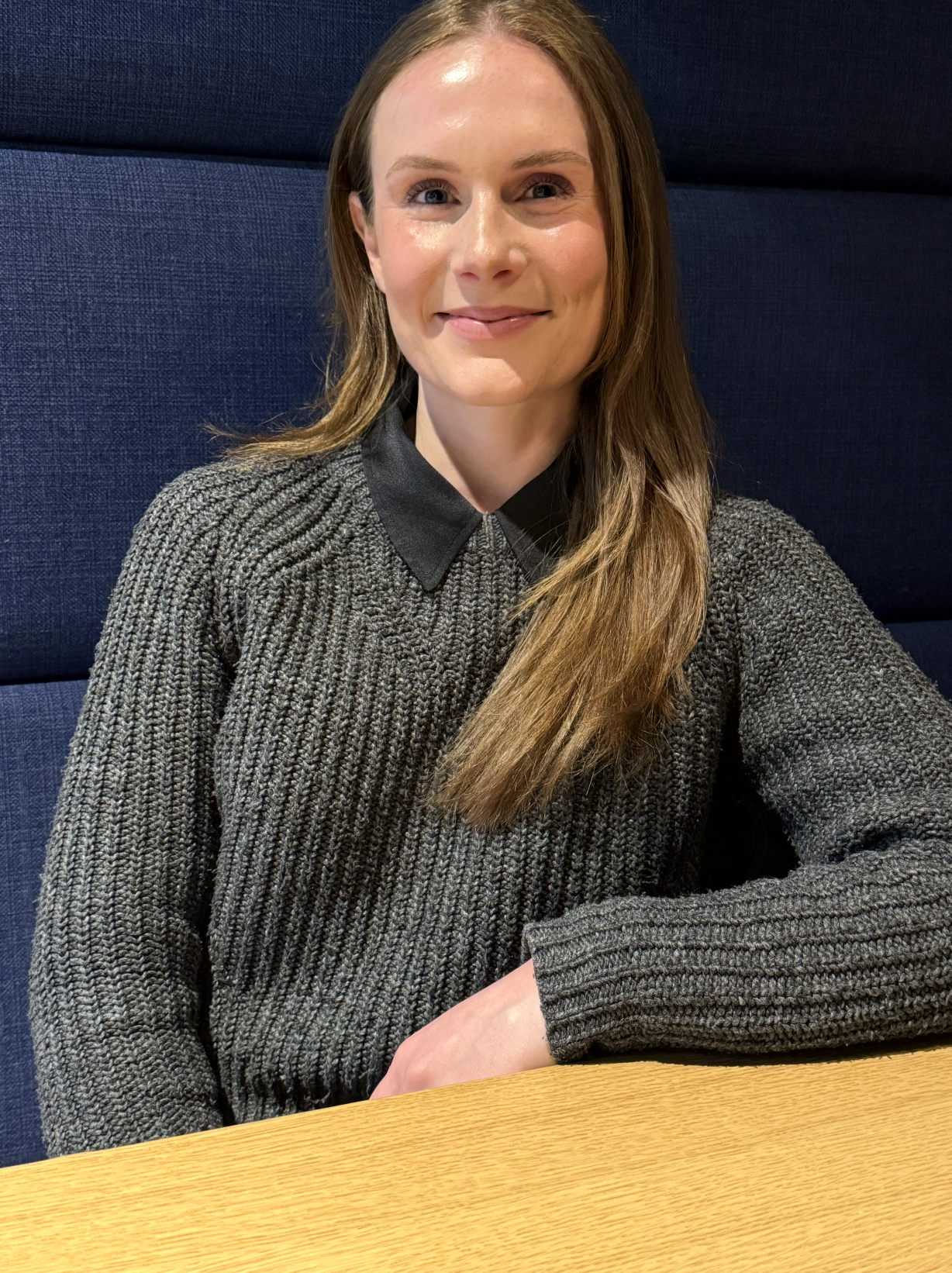
Leigh Raithby is a global health professional who has spent the past five years working on tuberculosis (TB) policy and advocacy in Canada, with a focus on increasing political awareness and investment. Now based in Copenhagen, she continues to engage with global TB efforts, bringing a perspective shaped by work in high-income, low-burden settings where TB is often misunderstood or overlooked.
We spoke with her about why TB is still widely seen as a disease of the past, and why changing that perception is essential to ending the world’s deadliest infectious disease, responsible for
around 1.23 million deaths annually.
You’ve worked on TB in Canada and are now based in Denmark. What have you observed about how TB is perceived in high-income countries?
Leigh Raithby:
One of the most striking patterns is how often TB is seen as a disease of the past or something that has already been solved.
In Canada, I had countless “TB 101” conversations with decision-makers who were surprised to learn that TB is still the world’s deadliest infectious disease. There was a general assumption that it no longer posed a meaningful threat, particularly within high-income settings.
Since moving to Denmark, I have noticed a similar sentiment. TB exists here, as it does everywhere, but it is largely out of sight and therefore out of mind. When a disease is not visible in everyday life, it becomes easier to deprioritise, even when the global burden remains extraordinarily high.
The challenge is that this perception shapes policy. If TB is seen as yesterday’s problem, it becomes very difficult to build the urgency needed to invest in ending it.
Why does that lack of awareness matter for the global TB response?
Leigh Raithby:
Awareness is foundational. We cannot act on what we do not recognise as a problem.
When political leaders and the public are not aware of TB’s continued impact, it affects everything from funding decisions to research priorities to how health systems are designed. TB becomes something that is addressed reactively, rather than strategically.
At the same time, TB is deeply shaped by inequality, disproportionately affecting people who face structural and socioeconomic barriers to health. That creates a disconnect: those with the greatest influence over global health priorities are often far removed from the realities of the disease.
As a result, TB can remain invisible in the very places where key decisions are made. Changing that dynamic starts with making the scale and urgency of the problem impossible to ignore.
You’ve described TB as a “winnable problem.” What do you mean by that?
Leigh Raithby:
TB is both preventable and curable. We have the necessary tools to address the disease.
That is what makes the current situation so frustrating. The continued burden of TB is not due to a lack of knowledge, but to a lack of prioritisation. In many ways, it reflects a series of choices, or the absence of them. As John Green writes in Everything is Tuberculosis, this is a problem that persists because we have not yet chosen to end it.
That same reality also leaves room for optimism. If the trajectory of TB is shaped by human decisions, it can be reshaped by them. With sustained commitment, investment, and political will, this is a problem we can solve.
You’ve also argued that investing in TB is not just about one disease. Can you explain that?
Leigh Raithby:
Investing in TB is one of the most strategic choices we can make in global health.
When COVID-19 emerged, the world did not start from zero. The response drew heavily on infrastructure, laboratory networks, surveillance systems, and community-based approaches that had been built over decades through TB programmes. Those foundations made it possible to detect, respond to, and manage a new infectious threat at speed.
The pandemic also revealed how vulnerable that progress is. As resources — human, financial, and technical — were redirected toward COVID-19, TB services were disrupted across many settings. The consequences were immediate, with setbacks in case detection and increases in preventable deaths.
This tension is critical to understand. TB programmes have long underpinned global health security, yet they remain consistently underfunded and deprioritised. Investing in TB is not only about addressing a single disease; it is about strengthening the systems, capacities, and resilience we will depend on when the next pandemic emerges.
There are also clear inequities in how different diseases are prioritised globally. How do you see that playing out with TB?
Leigh Raithby:
TB is deeply shaped by inequality. It disproportionately affects people who are already facing structural disadvantages, including poverty, malnutrition, and limited access to healthcare.
That reality influences how the disease is perceived and prioritised. In many high-income countries, TB is often associated with “other” populations — people who are marginalised, or who live elsewhere. That sense of distance can make it easier for the issue to fade from focus.
The contrast with COVID-19 was striking. When a new infectious disease posed a direct and immediate threat to high-income countries, the global response mobilised at an unprecedented scale, with billions of dollars committed in a matter of months.
This is not to question the importance of that response, but it does highlight a broader issue. The level of urgency we bring to a health crisis is not determined only by its severity, but also by who is most affected. Recognising that dynamic is an important step toward a more equitable and effective global health response.
What needs to change for TB to receive the attention and investment it requires?
Leigh Raithby:
It starts with how we understand and talk about TB. This is not a disease of the past. It is a present and ongoing global health crisis that continues to be overlooked in many parts of the world.
Ending TB is ultimately a matter of choice. The tools exist, the knowledge exists, and the path forward is clear. What has been missing is the level of prioritisation needed to bring those elements together at scale.
There is also a need to reframe how we think about investment. Supporting TB efforts is not only a moral imperative, but also a practical and strategic one. It strengthens health systems, improves pandemic preparedness, and generates long-term social and economic returns.
With greater urgency and intention, there is a real opportunity to change the trajectory of this disease and to choose a different outcome.
Why voices like Leigh’s matter
For AJ Vaccines, perspectives like Leigh Raithby’s highlight a critical gap in the global TB response: the disconnect between the scale of the disease and the level of awareness and prioritisation it receives, particularly in high-income settings.
Her experience underscores that increasing awareness is not a peripheral activity, but a necessary step toward unlocking political will, investment, and innovation. It also reinforces that TB is not only a public health challenge, but a test of how global health priorities are set and whose needs are recognised.
By bringing these perspectives forward, voices like Leigh’s contribute to a broader shift in how TB is understood: from a disease of the past to a solvable challenge of the present, and from a neglected issue to a shared global responsibility.
This interview was conducted in Copenhagen as part of our “Voices in the Fight Against TB” series, highlighting perspectives from advocates and experts working every day to end tuberculosis.