Interview by Trine Bastian, AJ Vaccines
Petra Heitkamp is a global public health specialist who has worked with tuberculosis (TB) for decades across research, policy, and implementation. She has supported TB programmes through roles with organisations such as WHO and the Stop TB Partnership, and has spent significant time working with country teams and communities to improve how TB services reach people in practice.
TB is one of those fields where we learn the most when we systematically share what actually works on the ground — and adapt it across countries and contexts. The TBPPM Learning Network exists precisely to accelerate that exchange and turn practical lessons into scalable models.
We spoke with Petra about why TB programmes need stronger “public-private mix” collaboration, what the Covid-19 response can teach us, and why community trust, not only clinical tools, is essential if we want to reduce stigma and reach the people who are still being missed.
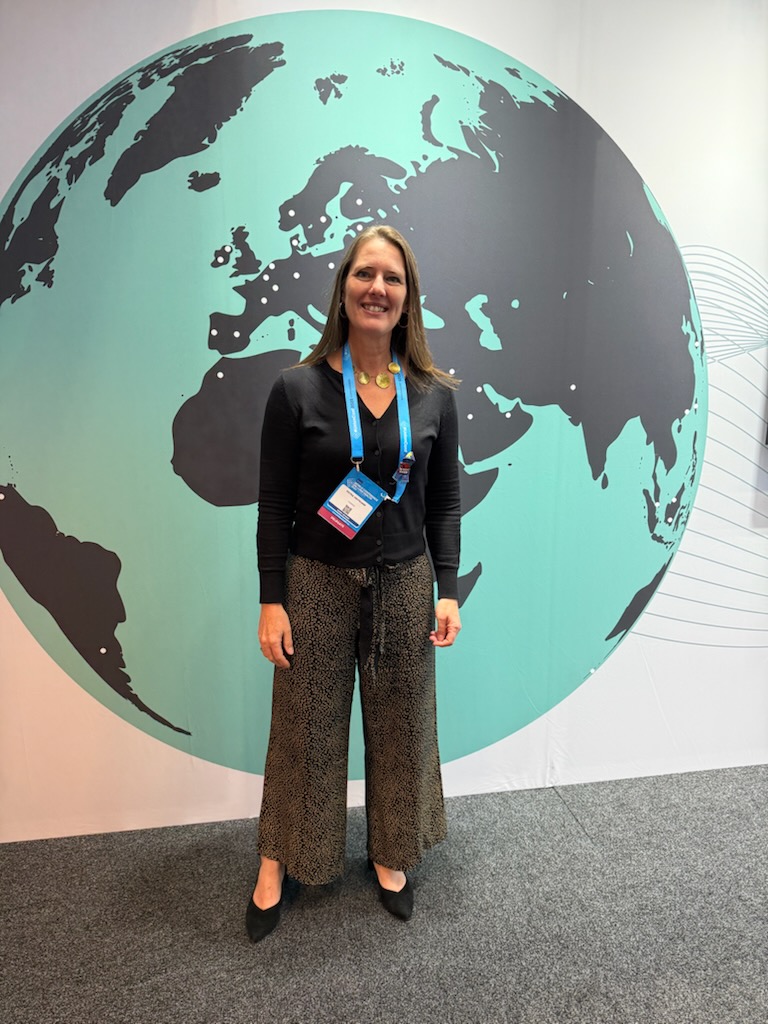
Could you briefly introduce yourself and your work with TB?
Petra Heitkamp:
I’ve worked with TB since the early part of my career, and what has kept me engaged is that TB sits at the intersection of medicine, society, and systems. It is never only a technical disease. It’s about how health systems function, whether people trust them, and whether services are designed around real lives.
Over the years I’ve worked in and with global organisations, including the WHO, and I’ve been closely involved in country-level TB work and partnerships. I’ve also worked with networks that support peer-to-peer learning across countries and programmes, because TB is one of those fields where we learn the most when we share what actually works on the ground.
Can you elaborate on the “public-private mix” as a vital tool in the fight against TB.
Petra Heitkamp:
Public-private mix is essentially a way of organising TB response so it reflects where people actually seek care.
In many countries, people don’t start in the public health system. They go to private clinics, pharmacies, informal providers, or local frontline practitioners. If TB programmes focus only on public clinics and centralised referral pathways, they miss a huge part of the picture — and they miss people.
A strong public-private mix means the TB programme actively engages private and non-public providers: training them, giving them clear referral routes, integrating reporting, and making sure quality standards and treatment protocols are consistent. It’s not about replacing public systems. It’s about connecting the ecosystem so people can be diagnosed and treated early — wherever they enter.
A strong public-private mix is not only about engagement — it is about shared accountability. That means integrated reporting, aligned incentives, and joint monitoring so that no patient disappears between systems.
Can you give a few examples of how community-led approaches have made a difference in the fight against TB?
Petra Heitkamp:
Community-led approaches can change the trajectory of TB because they address what health systems often struggle with: trust, access, and timing.
One recurring challenge in TB is “missed opportunities.” People experience symptoms, but they wait — because they are unsure, afraid, busy, or worried about consequences. Communities can help shift that, because they reach people earlier and in a different way.
We’ve seen impact from practical approaches like contact tracing led by community teams, peer-to-peer support networks, and local outreach that brings information and services closer to people rather than asking people to navigate a distant system. In some settings, simply having a trusted community link who can say, “This is treatable, and you won’t be alone,” is the difference between early testing and late-stage disease.
The broader point is that we need to bring TB services to people — not keep TB services waiting for people to find them.
Please explain how we utilised existing protocols from TB-treatment in combating COVID-19.
Petra Heitkamp:
One of the underappreciated lessons from Covid-19 is how much existing disease programme infrastructure mattered.
TB programmes already had protocols and routines that turned out to be highly relevant: infection control thinking, contact tracing methods, community outreach structures, and systems for monitoring adherence and follow-up. Many countries adapted those capabilities quickly — not because TB and Covid are the same, but because the operational discipline was already there.
In other words, TB programmes had built a type of readiness that could be repurposed under pressure. That tells us something important about the strategic value of strong TB systems — they don’t only protect against TB.
Great efforts were made in collaborations worldwide to combat Covid-19. Is it possible to utilize the same approach in the fight against TB?
Petra Heitkamp:
Yes — but it requires us to treat TB with the same urgency and the same willingness to coordinate across sectors.
During Covid-19 we saw an ability to align research, policymaking, supply chains, media, community engagement, and health systems around a shared goal. We also saw unprecedented regulatory flexibility, rapid financing, and public-private collaboration in manufacturing and supply chains. TB needs that level of multi-sector collaboration too. Not only inside TB programmes, but across other disease programmes and across society.
This matters because we are working within clear global frameworks. The world has committed to the End TB targets and the broader Sustainable Development Goals. Reaching them will depend on whether we can move from fragmented efforts to integrated, people-centred delivery that actually reaches those currently being missed.
TB cannot remain a “control programme” that sits in its own lane. It has to move toward a more holistic, people-oriented approach that empowers people to take responsibility for their health — without fear and without taboo.
To succeed in this, which challenges would need to be overcome?
Petra Heitkamp:
The biggest challenges are not a lack of knowledge. They are fragmentation, fear, and the gap between policy and lived reality.
First, systems are often too centralised. People are referred to facilities they don’t know, in places that feel distant, bureaucratic, and intimidating. We need to strengthen frontline providers and local access points so the pathway feels safe and familiar.
Second, we have to engage the private sector properly — because in many settings a large share of care happens outside the public system. If we don’t integrate those providers, we will continue missing people.
And third, we have to modernise how we communicate. We are living in a time of disinformation and disengagement. It’s not enough to have the “right message” in a technical sense. We need to speak in a language people recognise and trust — and we need the right messengers and channels, not only health professionals.
TB is still heavily affected by stigma. How can collaboration between medical teams and communities help break down these barriers?
Petra Heitkamp:
Stigma grows in silence and fear — and it thrives when TB is treated as something shameful, or something that only happens to “others.”
Health professionals have credibility, but communities have closeness. When those two work together, we can normalise TB and reduce fear. A local frontline provider who is properly informed and trusted can be one of the strongest assets in TB response — because they don’t feel like “the dangerous person in a white coat.” They feel like someone you can talk to.
But stigma is not only social — it is structural. It is linked to poverty, gender norms, migration, and job insecurity. That is why breaking stigma requires more than communication campaigns; it requires systems that protect people.
I’ve seen this in practice. In Indonesia, for example, religious leaders played a powerful role. They helped deliver messages that TB is not something to be afraid of and that seeking care is responsible. The impact came not only from the message, but from who said it and how it was said.
Which strategies can health systems adopt to reduce stigma and improve TB response?
Petra Heitkamp:
Start by designing services around people’s lives — not around systems.
That means strengthening frontline access, making testing and follow-up easier to navigate, and using language that reduces fear rather than reinforcing taboo. It also means listening: understanding what people are afraid of, and what keeps them away.
We also need to broaden who communicates about TB. Media, community leaders, and even entertainers can help “debunk” the story — not by simplifying science, but by making the human reality visible and the disease more normal to talk about.
And we have to connect the pieces: stigma, vaccination, hesitancy, misinformation, access, private sector dynamics — these are not separate issues. They influence each other in the real world.
What do you hope policymakers take away from your work?
Petra Heitkamp:
I hope policymakers understand the importance of multi-sector collaboration — and that TB must work with other disease programmes instead of operating in isolation.
We need TB programmes to move from a narrow control mindset to a holistic, “how-to” approach that empowers people and removes fear. I’ve heard too many stories where TB leads to exclusion — girls being disowned, people losing work, families carrying shame. That tells us TB is never only a medical issue.
We also need countries to prepare early for what’s coming — for new diagnostics, shorter treatment regimens and eventually for new vaccines. It is never too early to engage communities and healthcare providers. If we wait until roll-out, we are already late.
Communities need to be part of the programme, not an afterthought. Pharmacies need to be involved in designing point-of-care testing, providers need to know new algorithms — these are not an afterthought.
Why voices like Petr Heitkamps’s matter
For AJ Vaccines, conversations with experts like Petra Heitkamp are a reminder that ending TB requires more than clinical tools. It requires systems that work across sectors, partners who connect public and private care, and community engagement that builds trust early — before people become too sick, too afraid, or too invisible to the system.
This interview was conducted at the Union World Conference on Lung Health 2025 in Copenhagen as part of our “Voices in the Fight Against TB” series, highlighting perspectives from experts and advocates working every day to end tuberculosis.